
Work / Legal research · Web and iPhone
MayaClerk
A legal research service on the web and on iPhone. One question searches case law and the U.S. Code, and a research assistant answers with the cases it read.
- Web: Live
- iPhone: Built and tested
On the screen
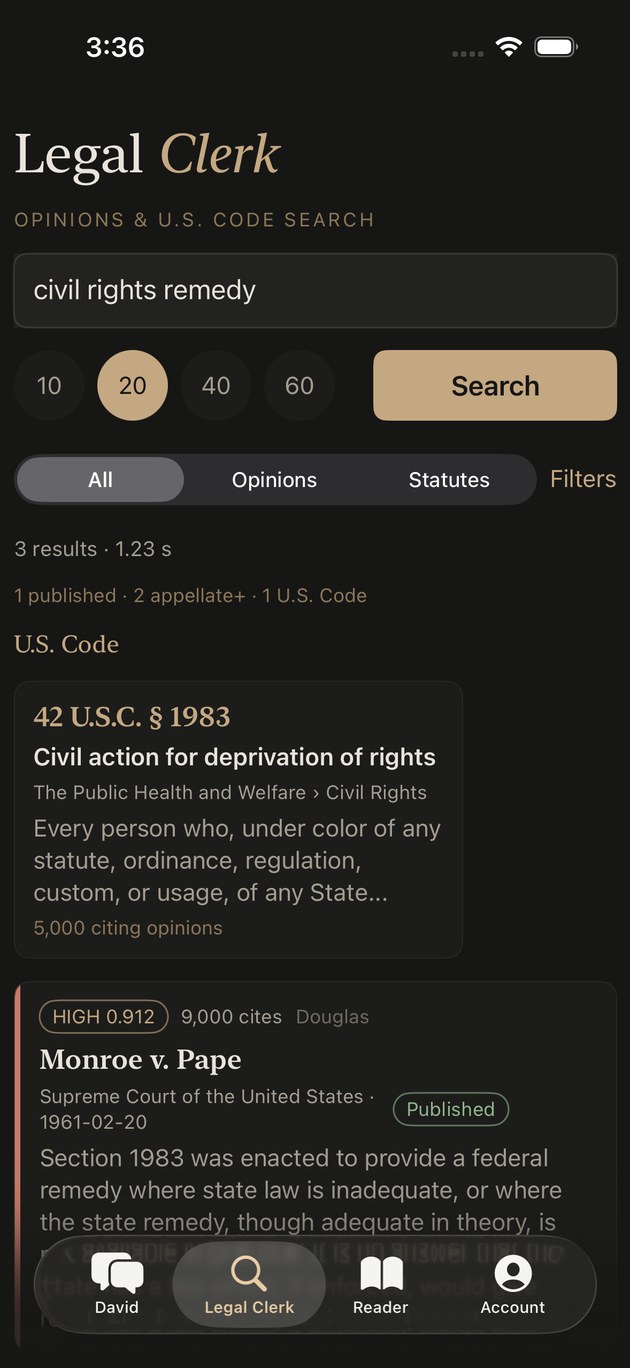
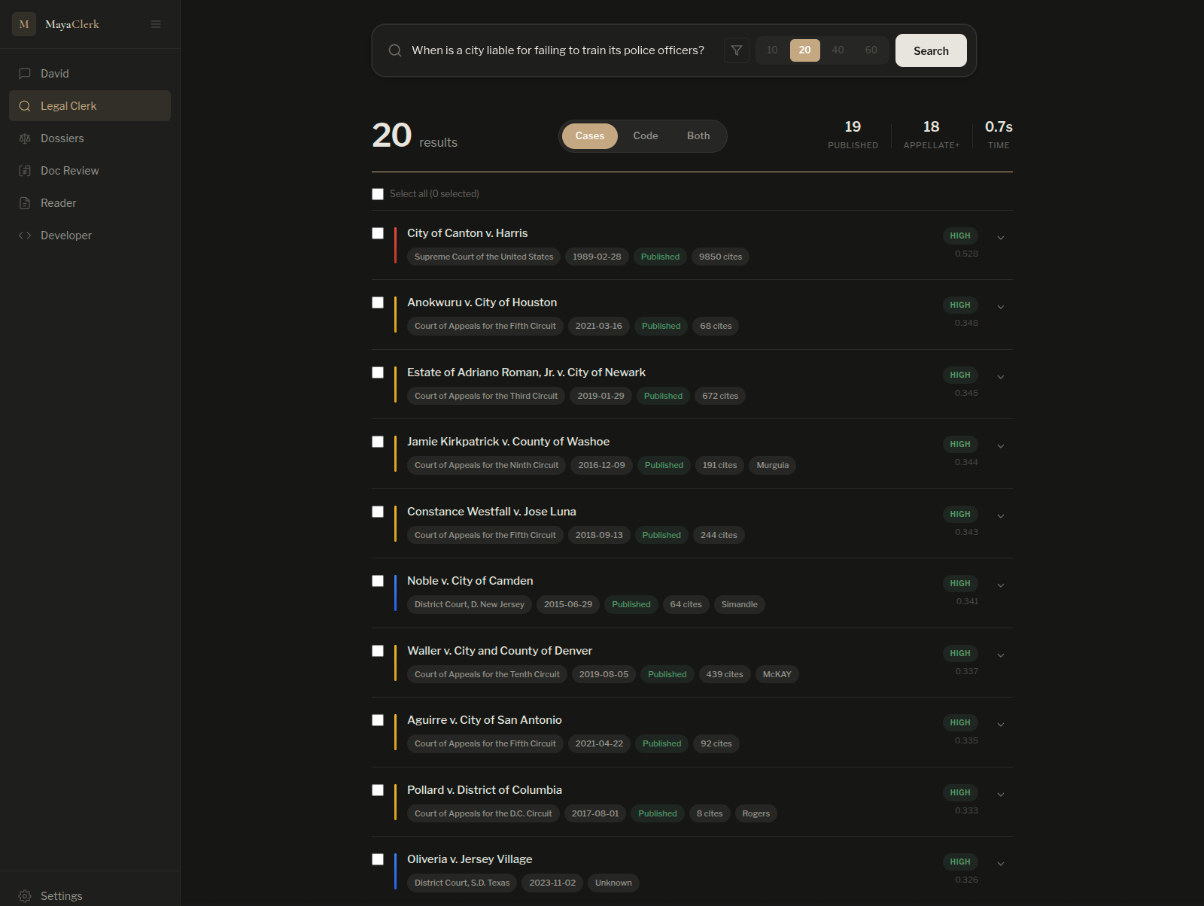
Search. One question returns statutes and opinions together, each with its court, date and standing.
Fig. 02.1 — Section A–A · MayaClerk for iPhone
The app in front is real. Point at a layer to see the part behind it.
- 01A native SwiftUI app with four tabs: David, Legal Clerk, Reader and Account.
- 02155 automated tests, and tested on a real iPhone.
- 03From start to an accepted, tested build in two days.
Find the law, read it, ask about it.
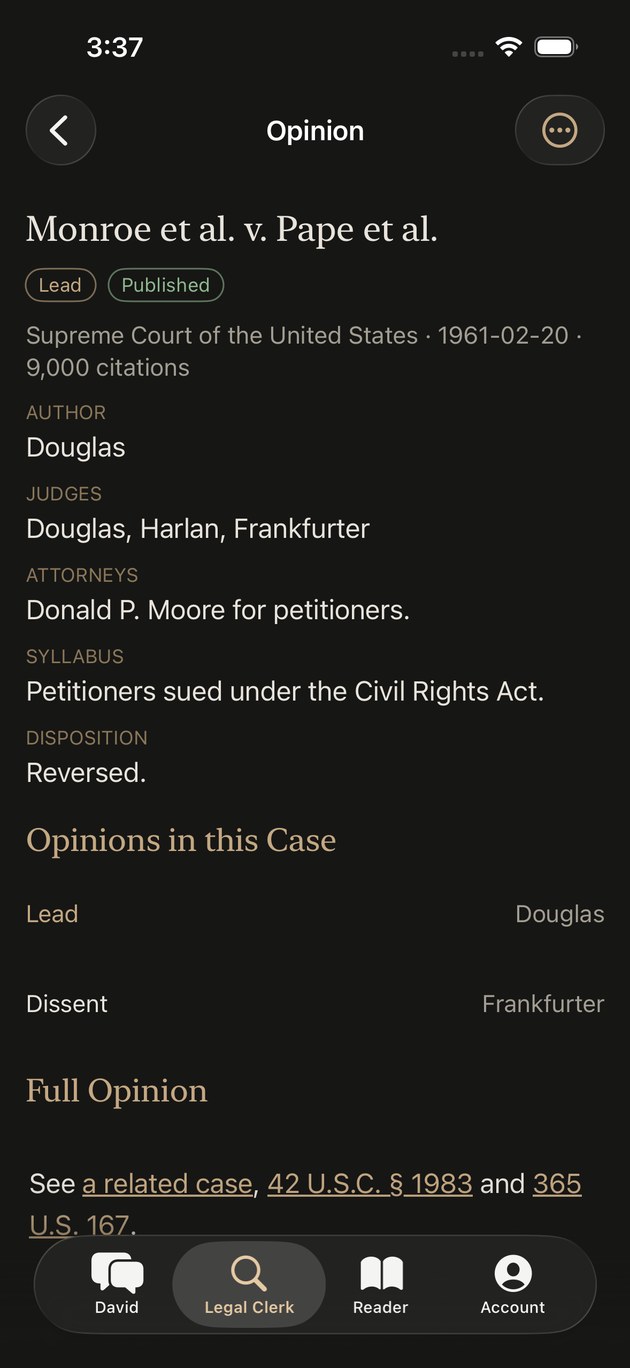
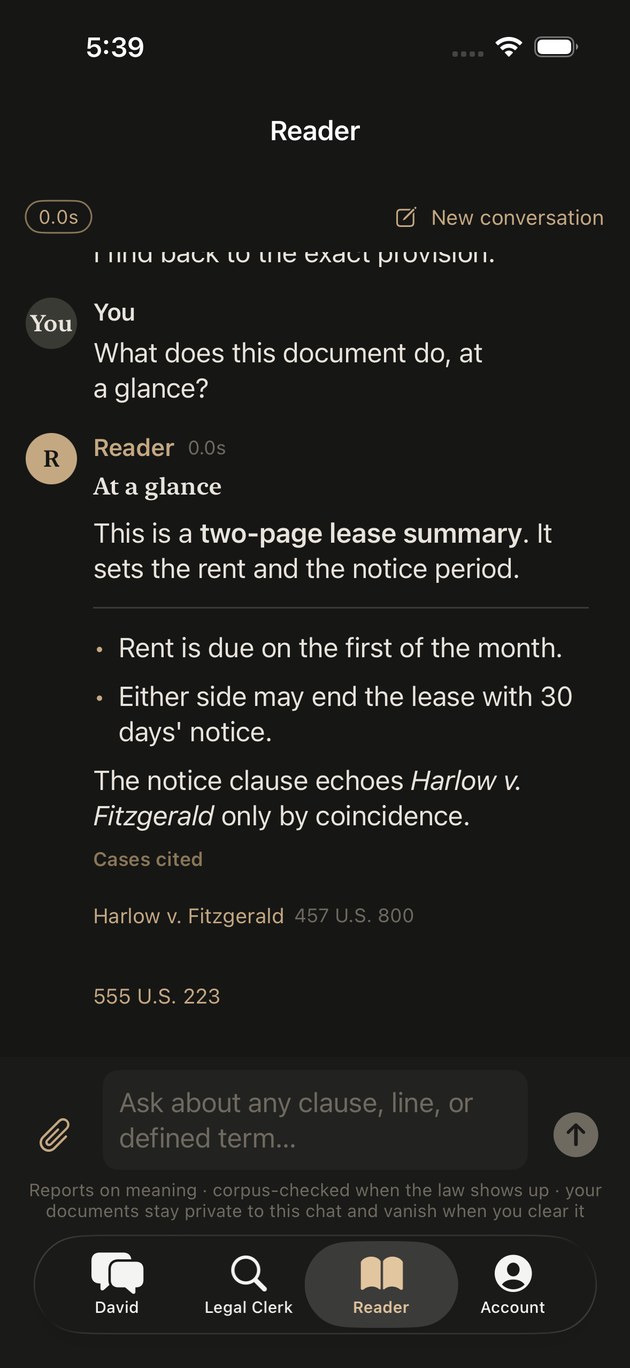
Three things a researcher does all day, in one product, on the web and on iPhone. The pictures are the live website and the app as built.
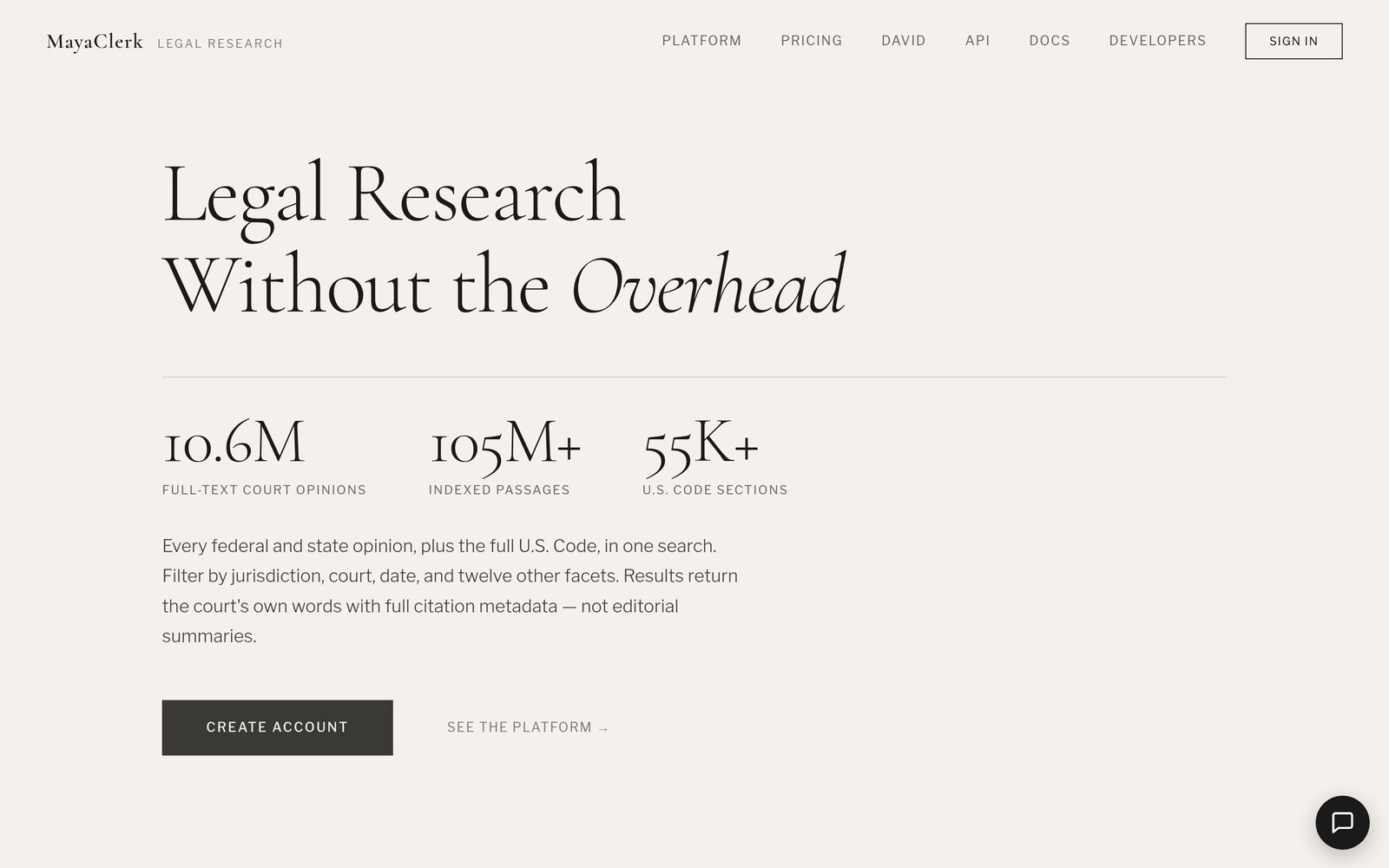
- 10.6M
- court opinions in full text
- 105M+
- passages indexed
As published on mayaclerk.com
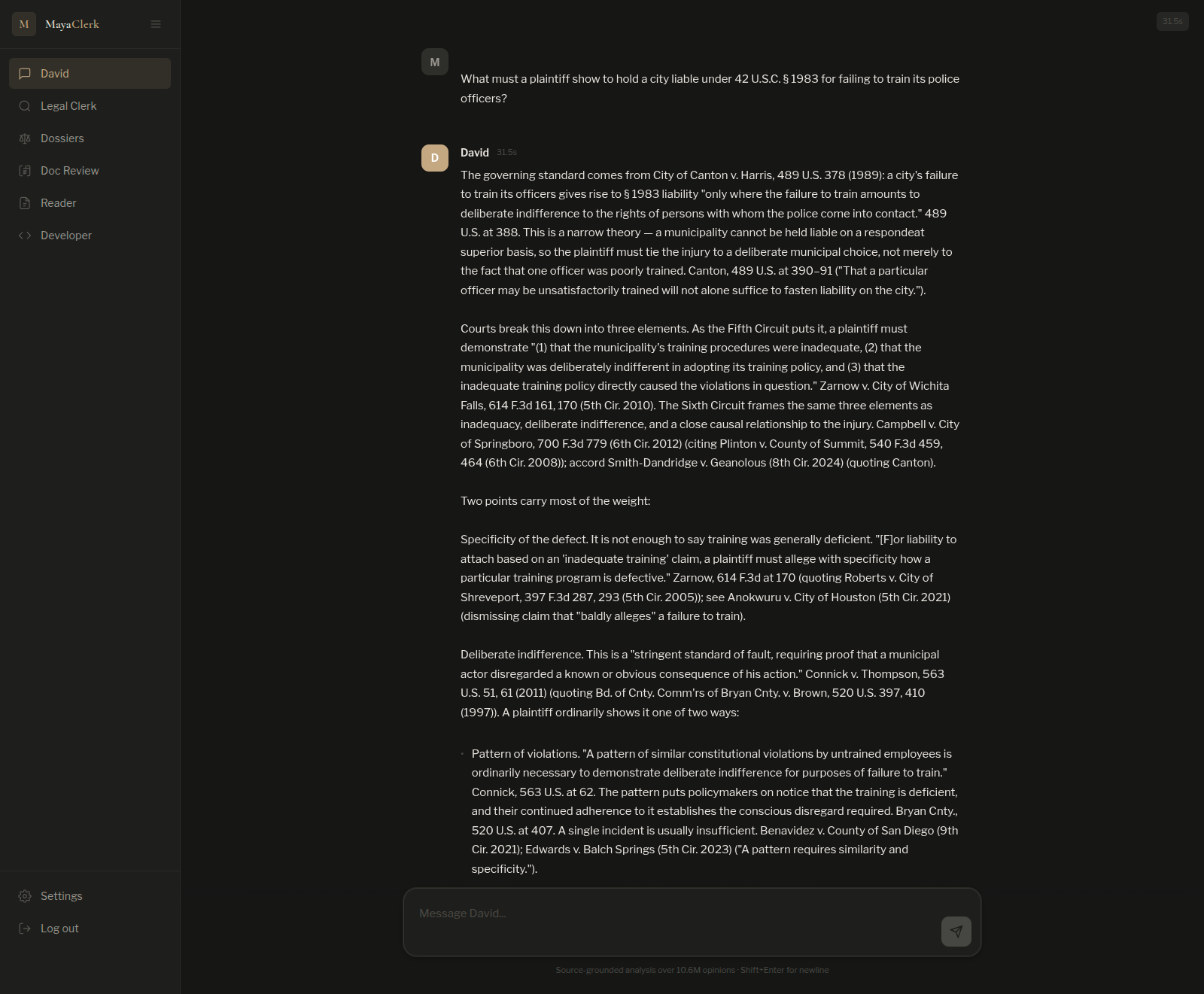
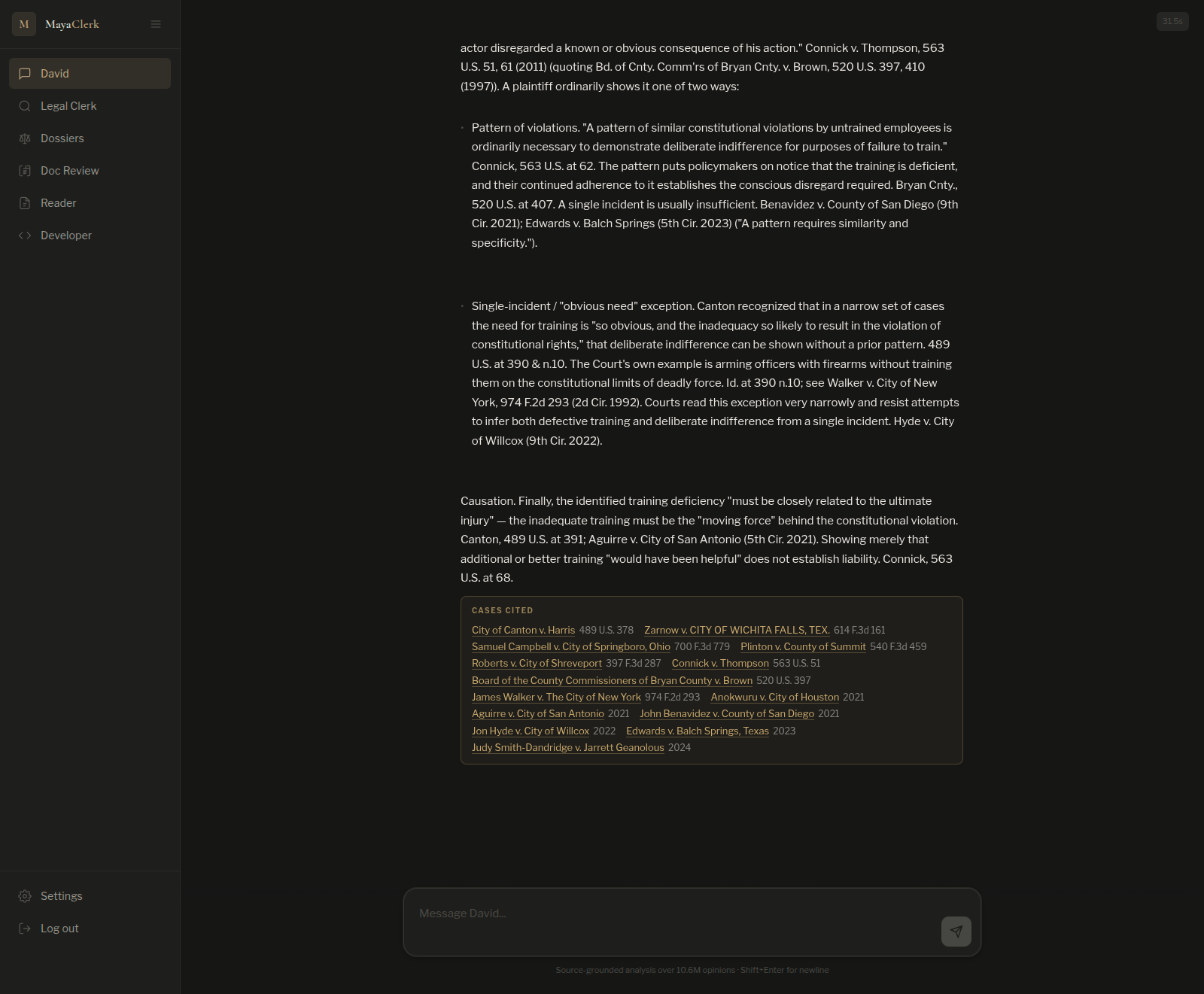
David plans the research, runs the searches, reads the opinions and answers with the cases it cited, so every claim can be checked against its source.
Legal Clerk: search.
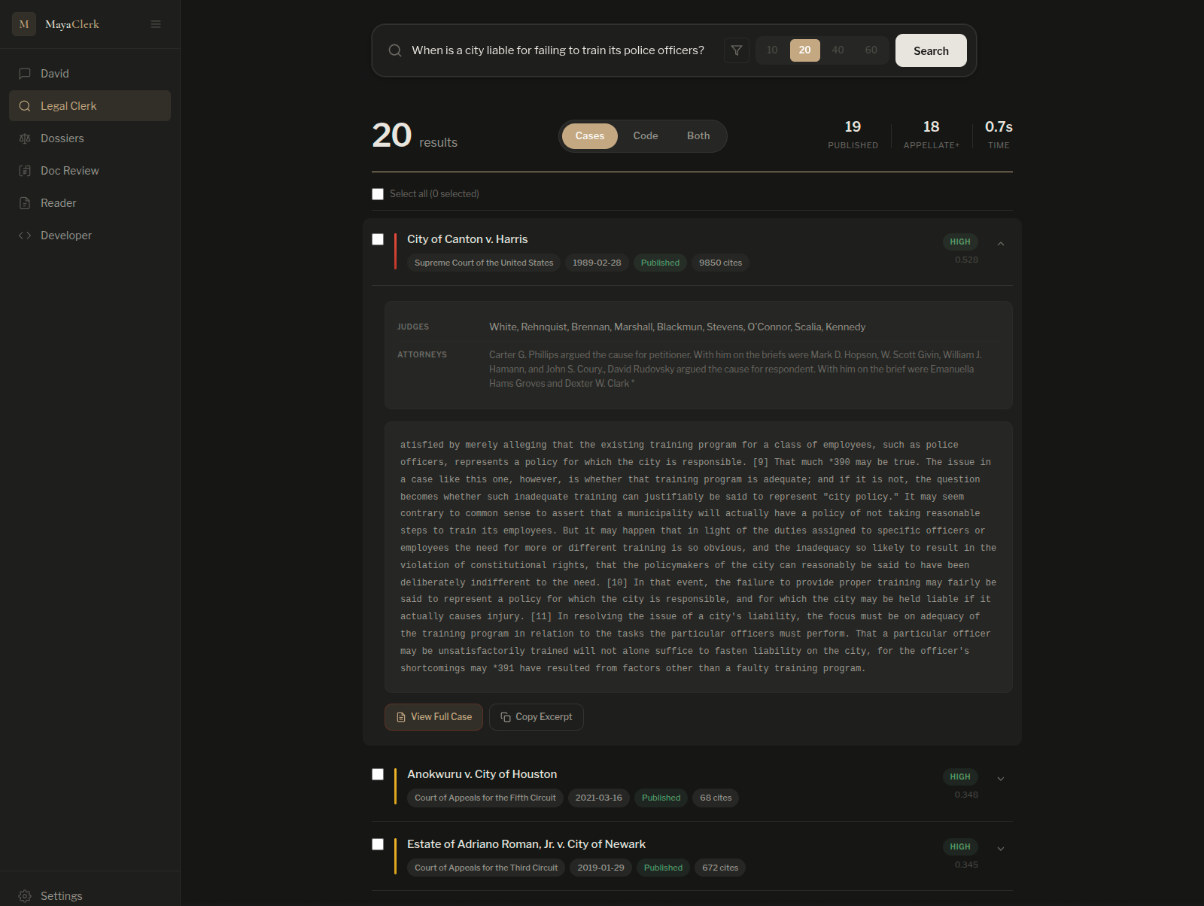
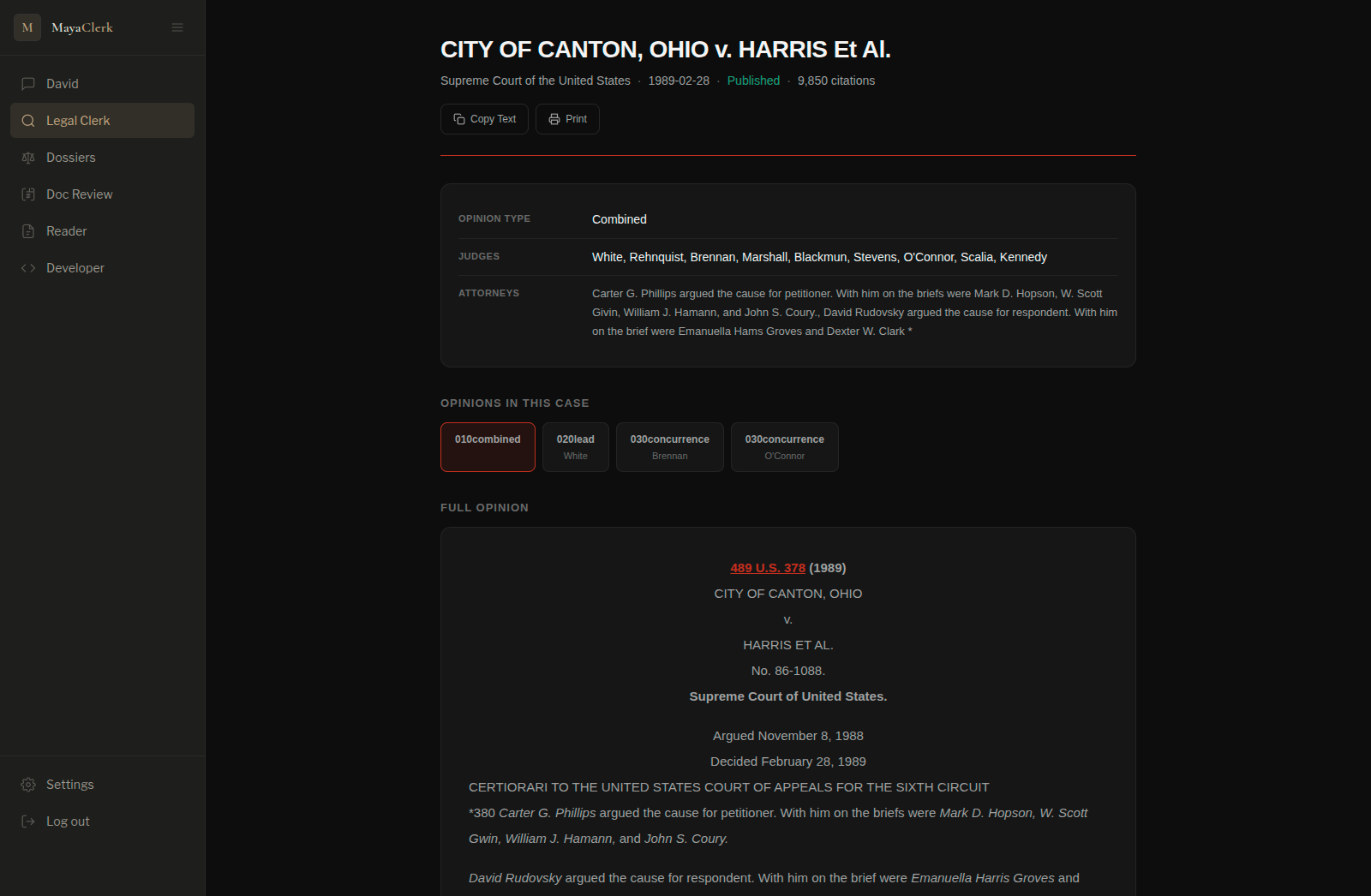
One question searches court opinions and the U.S. Code together. Two searches run at once, by meaning and by exact words, and are fused into one ranking. Results are ranked again on authority: the level of the court, how often a case is cited, how recent it is. Filters narrow by jurisdiction, court, precedential status, opinion type, date and case name. Typing a U.S. Code citation pins that section first; a case citation goes straight to the opinion.
David: the research assistant.
David has to search before it answers. It works within a fixed budget of research steps: run a search, open and read a full opinion, search again. It may cite only what it actually retrieved. After the answer is written, every citation is checked against the collection in five passes (reporter citations, opinion numbers, the cases the assistant saw, full case names, U.S. Code citations) and only verified citations become links. The check never rewrites the answer.
Reader: your own documents.
Upload a PDF, a Word file, an email or a web page and ask about it. The answer quotes the document with page references and reaches for the law only when a case or statute comes up.
Dossiers: three agents on one claim.
A Dossier turns a described legal claim into two competing strategy memos, one for the plaintiff and one for the defence, and a neutral overview of both.
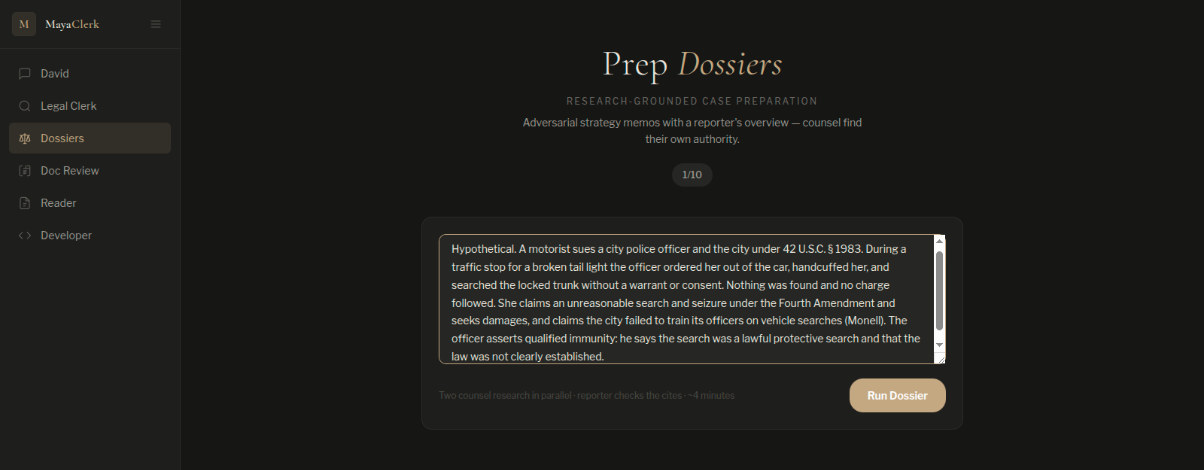
- 01
Counsel research in parallel
Two research agents work on the claim at the same time and independently. Neither sees the other's work. Each searches the same case-law and U.S. Code index as the rest of MayaClerk, by meaning and by exact words, and can open the full text of an opinion. An agent has to search before it writes, and works within a fixed budget of searches and time.
- 02
The reporter reads both
A third agent reads both memos and writes an overview: where they agree, where they conflict and what decides between them.
- 03
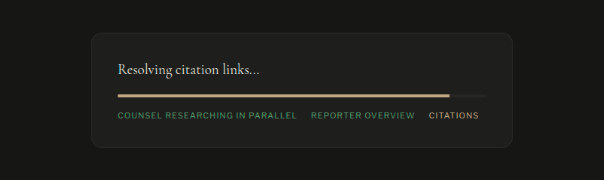
Citations are resolved
Authorities are linked only when they resolve to a real opinion or statute in the collection, and each link opens the source inside MayaClerk. This step is plain code with no AI model in it, and it never rewrites a memo.
The reading room
Results open with a tab for the claim, the overview and each side's memo, and the reporter beside them. The reporter stays available afterwards. It answers questions about either memo and can write further documents on request, and every document is kept as a numbered version. Documents can be downloaded as Markdown or printed.
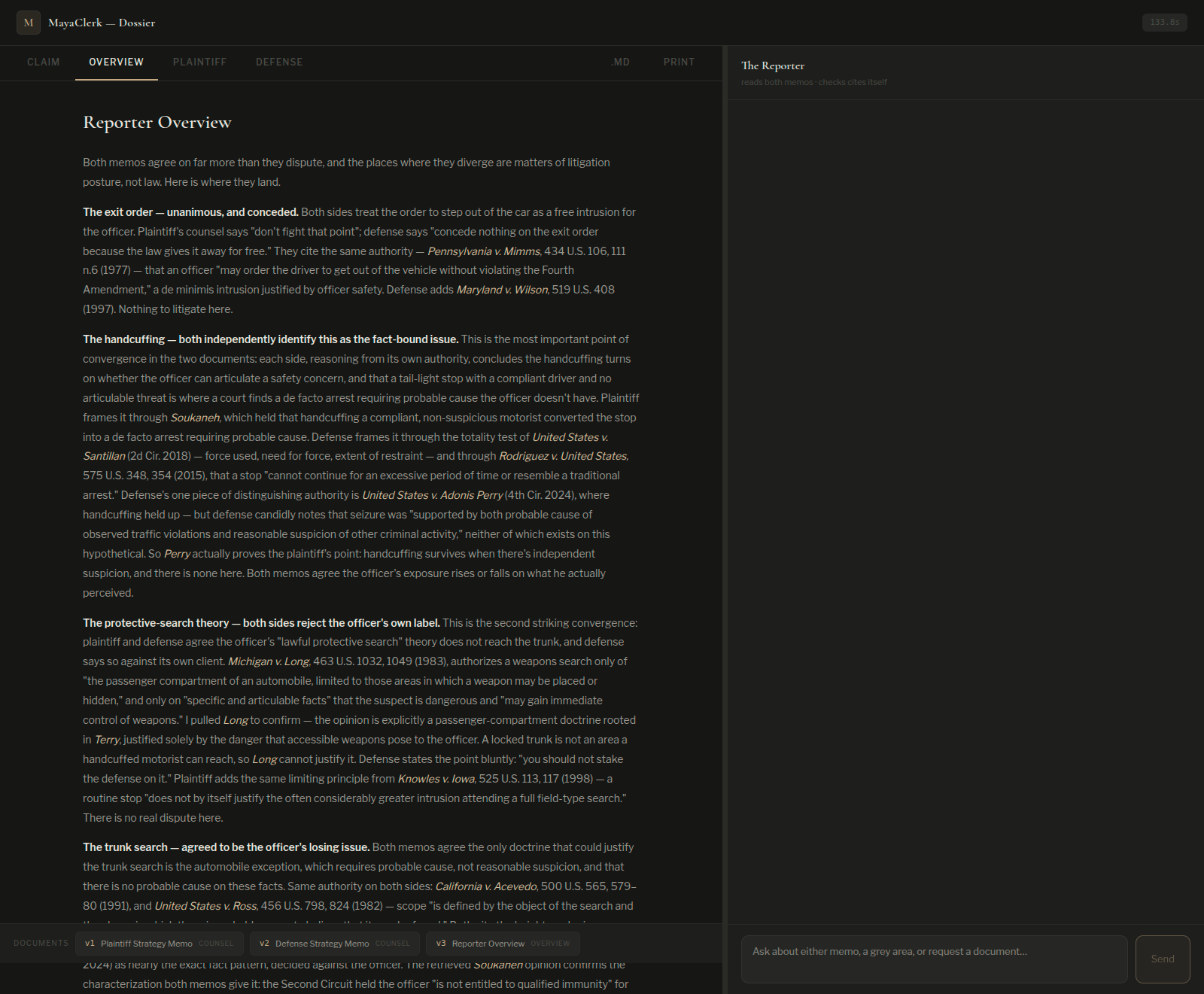
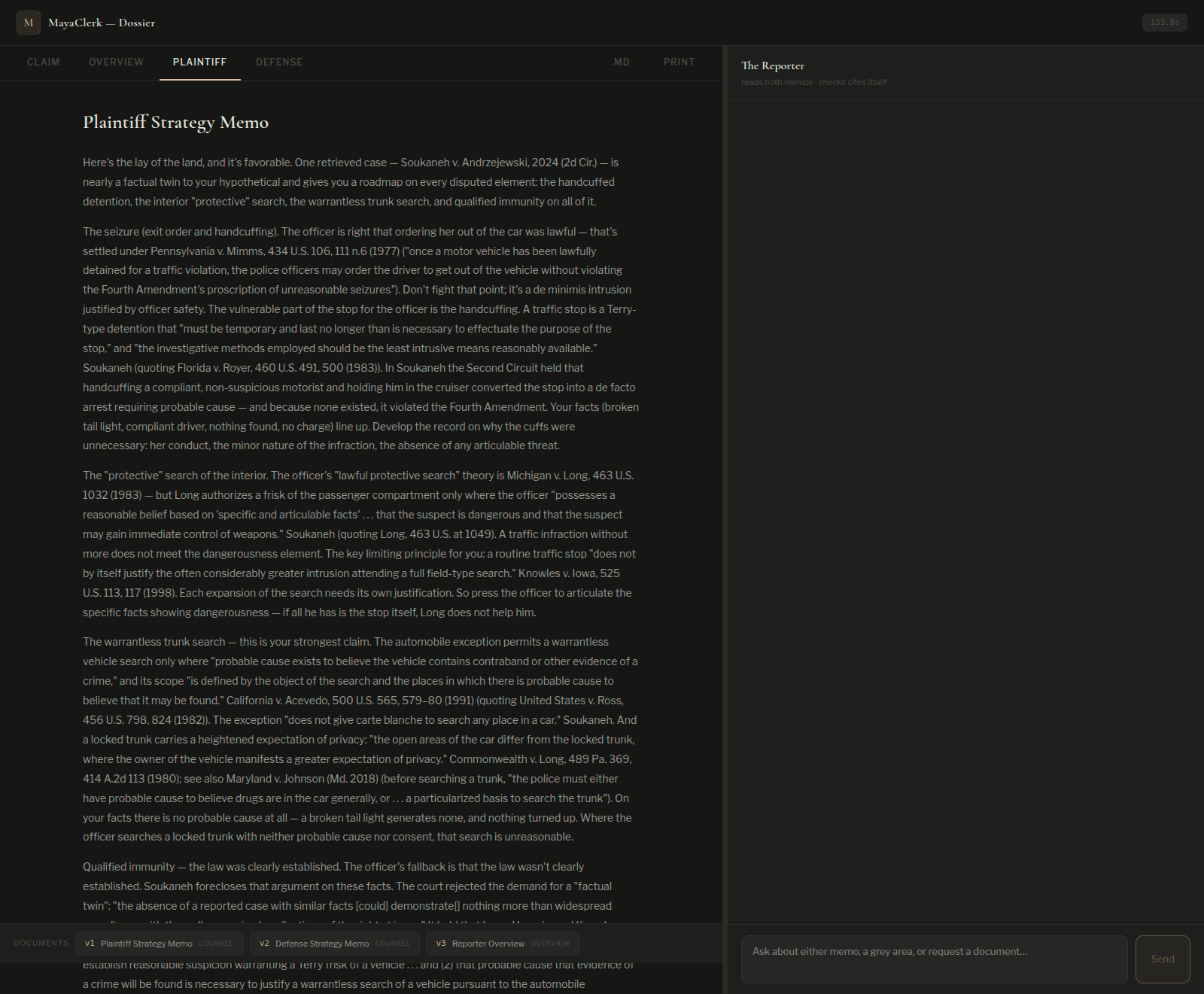
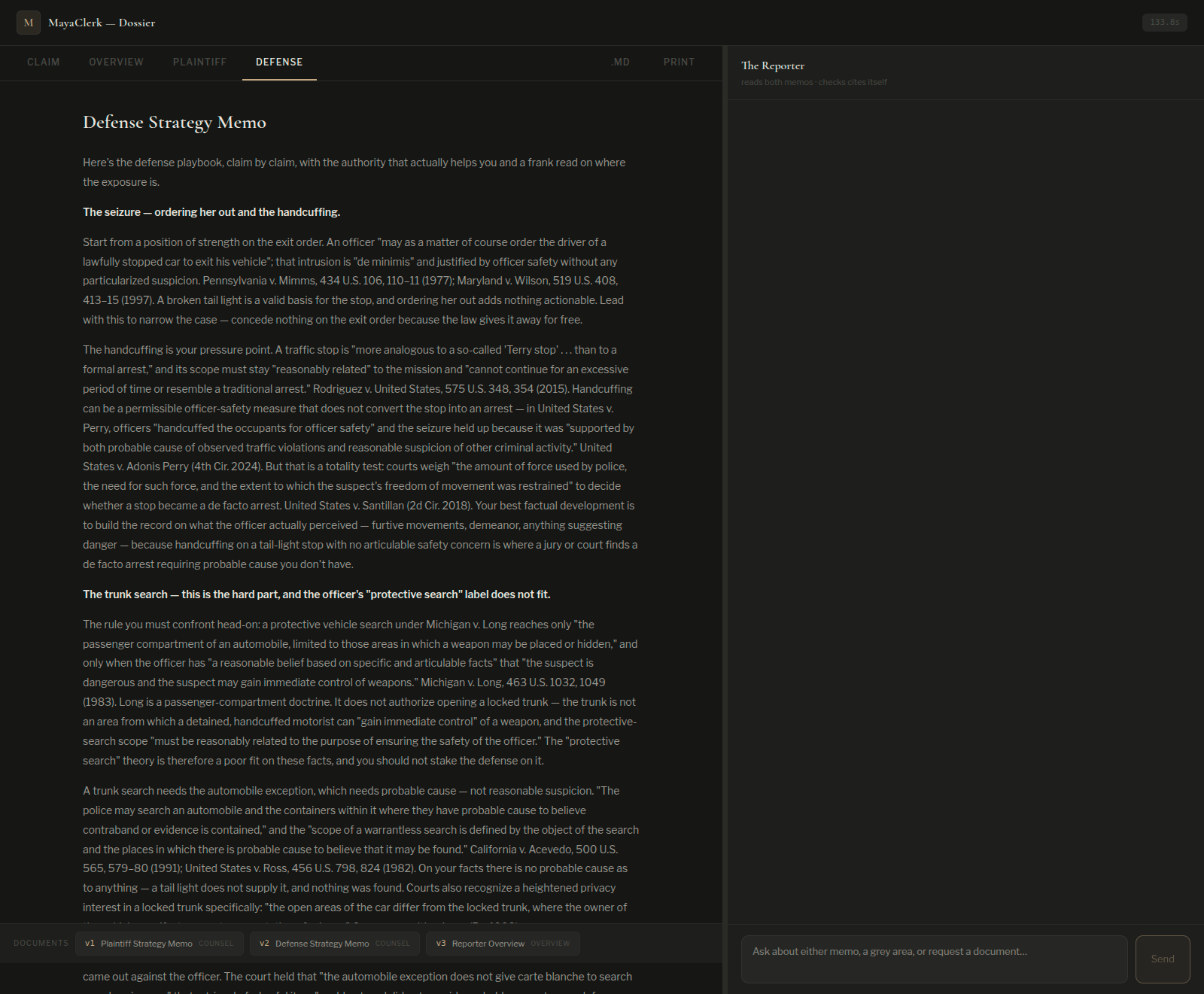
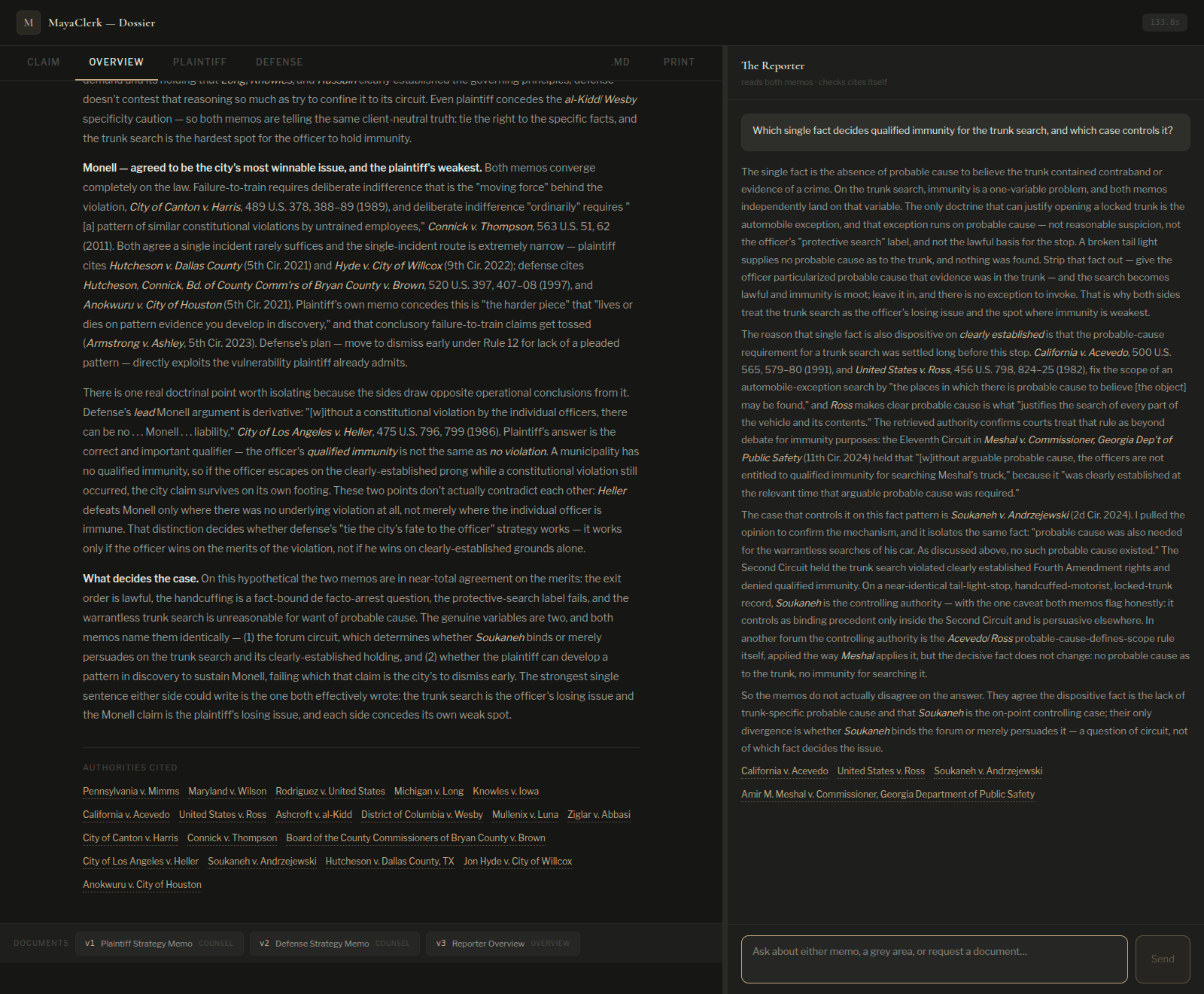
One recorded run
- Date
- 14 November 2026
- Claim
- A hypothetical: a motorist's civil-rights suit over a traffic stop and a trunk search
- Documents
- Plaintiff Strategy Memo, Defense Strategy Memo, Reporter Overview
- Authorities linked in the overview
- 19
- Follow-up
- One question, answered by the reporter with four linked authorities
Built with
Laravel, Inertia and Vue on the website. A Python service for the agents. Redis for the state of a run. PostgreSQL with pgvector for the collection.
Doc Review.
In code and not yet verified live Review documents in batches grouped by matter, edit the findings, get a report, and export a privilege log and the findings. Doc Review is listed on mayaclerk.com. We have not yet recorded a run for this page.
Developer API.
The same search is offered to other software: search and opinion lookup over HTTP, documented and versioned, with self-serve keys and per-call billing. Keys are shown once and stored only as a hash.
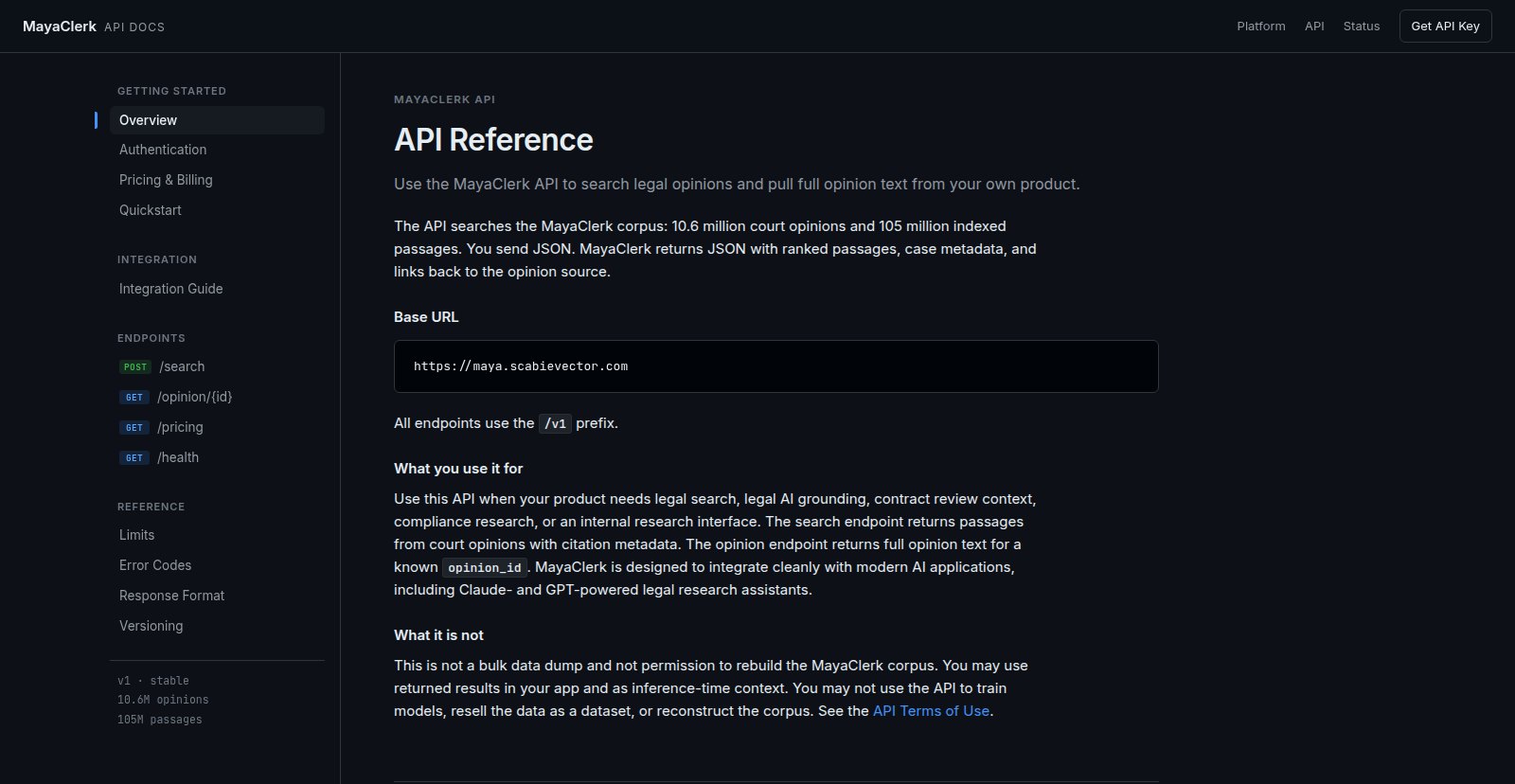
One engine, three front ends.
The website, the iPhone app and the developer API all run on the same engine. The iPhone app was added without changing the backend.
The iPhone app.
Built and tested The app is finished and tested. It is not in the App Store yet, and this page will say so until it is.
- Built with
- Native SwiftUI
- Tabs
- David, Legal Clerk, Reader, Account
- Automated tests
- 155
- Device testing
- A real iPhone
- Start to tested build
- Two days
- Independent review
- refused four times before it passed
- Status
- Built and tested
What this proves for your project
A large collection made searchable and citable; an assistant held to its sources; several agents set against each other on one question, with a third to reconcile them; one backend serving web, mobile and outside developers; a mobile app taken through independent review to a tested build.